

Many homeowners inherit a pool with their new house without prior experience. Use this section to start with the basics—from understanding your equipment and water chemistry to understanding routine maintenance and key pool features.
Equipment Overview
Filtration Pump
Filter
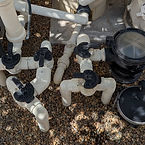
The pool equipment starts with the pump as it is central to maintaining pool health. The pump pulls the water in from the suction lines (skimmer/Main drains) then discharges it to the filter. The water goes through the filter media then returned to the pool or though the heater then back to the pool/spa.

The pump has a motor and an impeller that are connected by a shaft. The motor spins the impeller and water is pulled (much like a fan) from the suction lines, past the clear lid through the pump filter basket and pump housing. As the water is pulled through the center of the impeller, centrifugal force propels the water outward through the impeller channels. This is where the water transfers to pressure. The water is now under pressure from the centrifugal force of the impeller slinging it into the volute and out of the discharge port on top of the pump. The water is then forced into the filter.
The filter has no moving parts. It is a container which is designed to let water enter into the inlet port, though the filter media (sand/D.E./cartridge), then out through the outlet port.
Preventative Maintenance
Other Components
Common Features


Preventive maintenance means replacing small, wearable components before they cause major system failures. On a pool pad, pump shaft seals and rubber O-rings are the most critical low-cost parts to keep maintained. Having an extra skimmer weir, pump and skimmer basket on-hand controls costs while helping the tech to be efficient.
Collapsible text is great for longer section titles and descriptions. It gives people access to all the info they need, while keeping your layout clean. Link your text to anything, or set your text box to expand on click. Write your text here...
Swimming pool features transform a standard pool into a custom backyard experience. Common additions include: Spas & Waterfalls: Integrated spas offer relaxation, while rock or stacked-stone waterfalls add natural sights and soothing sounds. Water Effects: Sheer descents, fountains, and scuppers create elegant water curtains, architectural streams, and focal points. In-Floor Cleaning Systems: Pop-up nozzles built into the pool floor push debris toward the main drain, reducing manual sweeping. Infinity/Negative Edges: Vanishing edges allow water to spill over a lower wall, creating a seamless visual effect from water to the surrounding landscape.
POOL
Phases
These terms describe the seven phases for in-ground pool composite construction. They are in typical order of construction although steel can be prior to plumbing.
Pre-Excavation
Blueprint / Plan: The engineered architectural and structural drawing detailing precise pool dimensions, depths, plumbing layouts, steel schedules, and property setbacks required for permits and construction.
Formwork (Forms): Temporary wooden or steel framework erected around the layout perimeter to establish precise pool boundaries, set finished bond beam height, and hold structural concrete.
Grading (Bench / Grade): Leveling and contouring the soil around the site to establish the benchmark elevation, control runoff, and ensure proper deck levels.
Excavation: The initial construction phase where heavy machinery digs out the earth to match the exact dimensions, shape, and depth profile of the planned pool shell.
Plumbing: This is the phase where crews will install and connect the pool equipment to the pool. Typically, this will include lines relative to the features chosen for the pool.
Basic Pool - Skimmer, pool main drain, pool vac/return, pool return line, and pool fill line
Basic Pool w/ Spa - Skimmer, pool main drain, pool vac/return, pool return line, pool fill line, spa main drain, jet return, airline and gas line for the heater.
Basic Pool w/ Spa and Booster Pump - Skimmer, pool main drain, pool vac/return, pool return line, pool fill line, spa main drain, spa return, airline, booster pump, jet suction, and jet return
Steel (Rebar)
This phase will include a steel cage tied in the pool, as well as a spa. This cage should give you a rough idea and start to give shape to the pool.
Electrical
This is where the crews will run power from the house/subpanel to the pool electrical panel, which will be mounted in the equipment area. The pool electrical panel will supply power to the pool equipment. There will also be pool light conduits ran, where the light cans will be stubbed into the pool. This phase will typically include low-voltage conduits for data cables (e.g. control panels that may not be inside the house). Typically, the electricians will make a trip back to pull the lights from the pool to the pool panel, and make the connections.
Gunite: A dry mixture of cement and sand sprayed through a hose with high-pressure water added at the nozzle to form concrete pool walls.
Shotcrete: A pre-mixed wet concrete sprayed under pressure onto steel reinforcement rebar to form the structural shell of a pool.
Handpack: Concrete shoveled, packed, and shaped by hand around steps, benches, and complex contours where spray hoses cannot shape properly.
Deck
Plaster
POOL
TERMS
These terms describe the seven phases for in-ground pool composite construction. They are in typical order of construction although steel can be prior to plumbing.
Access Route
The clear pathway heavy machinery uses to enter the property without damaging utilities or adjacent structures.
Aggregate Finish
A plaster alternative made by mixing cement with tiny pebbles, quartz, or glass beads, creating a textured and durable pool interior.
Air Line
Dedicated PVC piping that introduces atmospheric or pressurized air from a blower into the water stream at the spa jets to create hydrotherapy bubbles via venturi effect, or tubing for pneumatic air switches.
Algaecide
A chemical compound used to prevent and kill algae growth in pool water.
Artificial Rock Work (Faux Rock)
Glass fiber reinforced concrete (GFRC) or sculpted concrete panels molded and colored to mimic natural stone formations and waterfalls.
Autofill
A mechanical or electronic float-valve system connected to a dedicated water supply line that automatically maintains the correct pool water level.
Autofill Float
The buoyant valve assembly housed inside the deck-level autofill canister that drops when water levels fall, mechanically opening the fresh water line until the pool fills back to the set target level.
Automatic Pool Cleaner (Pool Vac/Robotic Cleaner)
An autonomous device that drive along the pool floor and walls to vacuum debris and scrub surfaces.
Backwashing
Reversing the water flow through the pool filter to flush out trapped dirt and debris.
Balancing
Adjusting the chemical levels (pH, total alkalinity, and calcium hardness) to ensure water is safe and non-corrosive.
Bather Load
The total number of people using the pool at any given time, directly affecting sanitizer consumption.
Blueprint/Plan
The engineered architectural and structural drawing detailing precise pool dimensions, depths, plumbing layouts, steel schedules, and property setbacks required for permits and construction.
Bond Beam
A reinforced concrete ring running along the top edge of a pool wall that provides structural strength and supports the coping.
Bonding Grip (Equipotential Bonding)
A continuous bare #8 copper wire network that ties together all metal components (rebar, light niches, ladders, equipment) to eliminate stray voltage and shock risks.
Cantilevered Decking
A concrete deck that extends over the edge of the pool wall to eliminate the need for traditional coping stones.
Center Dig
The intermediate excavation stage between the shallow and deep ends that establishes the transitional slope of the pool floor.
Chairs (Dobies)
Small concrete blocks placed under the rebar cage to hold the steel off the dirt floor, ensuring it stays fully embedded in the concrete shell.
Chlorine
The primary chemical disinfectant used to sanitize pool water and kill bacteria or pathogens.
Circulation System
The network comprising the pump, filter, heater, and pipework that keeps pool water moving and clean.
Composite Construction
A structural building method combining high-tensile steel rebar grids with high-compressive-strength sprayed concrete (gunite or shotcrete) so both materials act together as a single monolithic unit to resist ground pressure and soil movement.
Cool Deck (Kool Deck)
A specialized textured concrete coating applied over pool decks that reflects solar heat to keep foot surfaces comfortable to walk on in hot weather.
Coping
The cap or edging material (stone, brick, or concrete) installed around the top rim of the pool wall.
Cyanuric Acid (Stabilizer/CYA)
A chemical that protects chlorine from breaking down under the sun's ultraviolet (UV) rays.
Deck Jet
A nozzle built into the surrounding deck that shoots a stream of water through the air into the pool.
Deck-O-Drain
A slender, linear PVC strip drain set directly into the concrete deck during pouring to collect surface runoff and channel standing water away from the pool area.
Decking
The flat patio area immediately surrounding the pool edge used for lounging and foot traffic.
Deep End
The lowest depth section of the pool, commonly designed for diving, swimming, or housing the main floor drains.
Deep End Dig
The specialized excavation cut that carves out the deepest depth and hopper profile of the pool footprint.
Double Bank (In-Floor System)
Plumbing an unused port on a distribution water valve module to tee directly into an active station line, causing that specific cleaning zone to fire twice per cycle when the pool design requires fewer zones than the valve's port capacity (such as needing 5 zones on a 6-port valve).
Equipment Pad
The specialized excavation cut that carves out the deepest depth and hopper profile of the pool footprint.
Excavation
The initial construction phase where heavy machinery digs out the earth to match the exact dimensions, shape, and depth profile of the planned pool shell.
Expansion Joint
A flexible seam placed between the pool coping and the deck to absorb ground movement without cracking either structure.
Face Piping
The exposed, visible PVC plumbing manifolds, valves, and loop connections installed above ground directly at the equipment pad.
Fall (Deck Slope)
The subtle downward pitch engineered into the surrounding deck surface (typically 1/4 inch per foot) to drain rainwater away from the pool edge.
Filter
A device containing sand, cartridge materials, or diatomaceous earth (DE) that traps physical debris as water passes through.
Formwork (Forms)
Temporary wooden or steel framework erected around the excavated site to establish precise pool boundaries and hold structural concrete.
Gas Line
A dedicated high-capacity gas supply line trenched from the meter to the equipment pad to fuel the pool/spa heater.
Grading
Leveling and contouring the soil around the excavation site to control runoff and establish proper deck levels.
Grotto
A cave-like concrete or artificial rock alcove set beneath a cascading waterfall where swimmers can sit.
Ground Water Relief Valve (Hydrostatic Valve)
A spring-loaded valve fitted into the main drain sumps to release underground water pressure and prevent an empty concrete shell from floating or cracking.
Grounding
An electrical safety connection that routes unintended fault currents safely into the earth to trip circuit breakers.
Gunite
A dry mixture of cement and sand sprayed through a hose with high-pressure water form concrete pool walls.
Hartford Loop (Air Loop)
An inverted U-shaped loop of PVC pipe routed above the water line inside or behind an elevated structure to prevent water from siphoning out of a spa or flooding the air blower motor.
Heater Bypass
A plumbed valve loop that diverts all or part of the water flow around the heater; when the heater is off, it bypasses the unit entirely to reduce head loss and shield internal parts from chemical damage, while during heating, it diverts excess volume in high-flow systems to prevent over-pressurizing the heat exchanger and maintain the optimal flow rate for heat transfer.
Impeller
A rotating disc with curved vanes driven by the pump motor that spins rapidly to generate centrifugal force, pulling water into the pump and discharging it through the filtration system.
In-Floor Bypass
A pressure-relief plumbing loop installed between the in-floor distribution feed line and the standard pool return lines, equipped with a calibrated 30 lb spring check valve that opens to vent excess water flow and protect the system if operating pressure climbs too high.
In-Floor Cleaning System
A set of pop-up nozzles built into the pool floor that push dirt and debris toward the main drain using water pressure.
Jets
Wall-mounted fittings that blast pressurized water (often aerated with air) into spas or steps for hydrotherapy and water movement.
Leaf Trapper (Canister)
An inline plumbing canister installed between the suction line and the pump to catch heavy leaf debris before it clogs the pump basket.
Ledge/Sun Shelf
A shallow, flat area (usually 6–12 inches deep) near the pool entry designed for lounging or placing sun chairs.
Light Niche
The waterproof housing set into the pool wall during steel/concrete phases to hold underwater light fixtures.
Liners (Vinyl)
The waterproof housing set into the pool wall during steel/concrete phases to hold underwater light fixtures.
Main Drain
Suction outlets located at the deepest point of the pool floor to help pull water into the filtration system.
Manifold
A central pipe setup featuring multiple valves that split water flow to different circulation loops, such as return jets, main drains, and water features.
Marcite (Plaster)
The traditional, smooth white coating applied over a concrete pool shell to make it watertight.
Negative Edge (Infinity Edge)
A structural design where water spills over a lowered wall into a catch basin, producing a visual effect of water vanishing into the horizon.
Over-Excavation
Digging slightly wider and deeper than the final pool size to accommodate structural steel, plumbing lines, and gravel bases.
pH Level
A scale from 0 to 14 measuring how acidic or basic the water is; ideal pool pH ranges between 7.2 and 7.6.
PPM (Parts Per Million)
The standard unit of measurement used to express chemical concentration levels in pool water.
Pressure Testing
Sealing plumbing lines and pressurizing them with air or water to verify that no leaks exist in the underground pipework before concrete is applied.
Pressure Vaccum Breaker (PVB)
An above-ground backflow prevention device installed on the dedicated fresh water line feeding the autofill to stop contaminated pool water from siphoning back into the home's potable drinking water supply.
Property Setback
The mandatory distance required by municipal zoning codes between the pool water edge/equipment and property lot lines or existing structures.
Pump
The mechanical heart of the pool system that draws water from the pool and drives it through the filtration and heating equipment.
PVC Pipe
Schedule 40 or 80 rigid polyvinyl chloride piping used to build all underground and surface circulation loops.
Raised Bond Beam
A section of the pool or spa wall engineered to rise structurally above the standard pool deck level, often used to accommodate sheer descents, waterfalls, or elevated spas.
Rebar Grid
A steel reinforcement structure tied together with wire in a precise grid pattern along the floor and walls to give concrete pools structural strength.
Return Lines
Underground pipes that deliver filtered, heated, and sanitized water back into the pool through wall return fittings.
Robotic Skimmer
Underground pipes that deliver filtered, heated, and sanitized water back into the pool through wall return fittings.
Saturation Index (LSI)
A calculated formula evaluating water balance to ensure the water is neither corrosive to equipment nor scale-forming on pool walls.
Scupper
An architectural wall spout made of metal, stone, or clay that projects a targeted stream of water out into the pool.
Shallow End
The entry section of the pool, typically 3 to 4 feet deep, designed for wading, lounging, and general play.
Sheer Descent
A linear water feature that projects a clear, crisp sheet of water in an arching waterfall away from a raised wall.
Shocking (Superchlorination)
Adding a high dose of sanitizer to the pool to rapidly destroy organic contaminants, combined chlorine (chloramines), and algae blooms.
Shotcrete
A pre-mixed wet concrete sprayed onto steel reinforcement rebar to form the structural shell of a pool.
Skimmer
A built-in opening along the top edge of the pool that pulls in surface water to trap floating debris like leaves and bugs before it sinks.
Spa (Hot Tub)
A dedicated, heated hydrotherapy basin installed adjacent to or integrated within the main pool structure.
Spa Main Drain
Dual-suction drain ports positioned on the spa floor designed to supply water to the main filtration pump while preventing suction entrapment.
Spa Suction (Booster Pump)
A dedicated set of high-flow suction ports in the spa linked to a booster pump that drives the hydrotherapy therapy jets.
Spillover Spa
A dedicated set of high-flow suction ports in the spa linked to a booster pump that drives the hydrotherapy therapy jets.
Subpanel
An elevated hot tub attached to the pool that spills its water directly over a wall or channel into the main pool.
Surcharge (Surcharge Steel)
Additional, closely spaced rebar installed through the wall-to-floor junction (cove) to reinforce the shell against heavy lateral pressure caused by nearby structures, house foundations, or rock features.
Total Alkalinity (TA)
A measure of the water's ability to resist sudden shifts in pH, acting as a chemical buffer.
Trenching
Excavating narrow underground channels from the pool shell to the pad area to protect PVC plumbing lines, gas runs, and electrical conduits.
Vacuum Line
A dedicated suction plumbing line run through the pool wall to attach manual or suction-side automatic pool cleaners.
Volute (Volute Casting/Pump Body)
The curved, spiral-shaped chamber of the pump housing that encloses the impeller and diffuser, designed to collect high-velocity water spun off the impeller blades and convert that kinetic energy into discharge pressure.
Water Curing
Hosing down a newly sprayed concrete shell multiple times daily for 7–10 days to ensure it cures slowly without cracking.
Waterfall
A raised rock or masonry water feature that drops circulating water back down into the pool basin.
Water Feature
A raised rock or masonry water feature that drops circulating water back down into the pool basin.
Waterline Tile
A row of ceramic or glass tile installed along the inside perimeter at the water level to prevent stain lines on the plaster.